Chronic diseases are long-term conditions that affect a person’s daily life and often require continuous medical care and support. Managing these conditions effectively is essential to maintaining good health and reducing the risk of complications. Self-management, the proactive role individuals take in controlling their condition, is therefore a critical and necessary component of modern chronic disease care.
Self-management education programs equip patients with the knowledge, skills, and resources needed to effectively manage their condition, leading to improved health outcomes and reduced overall healthcare costs. Remote Patient Monitoring (RPM) and Chronic Care Management (CCM) have emerged as promising, evidence-based strategies to significantly enhance and scale the self-management of chronic disease.
1. RPM: Technology for Chronic Disease Self-Management
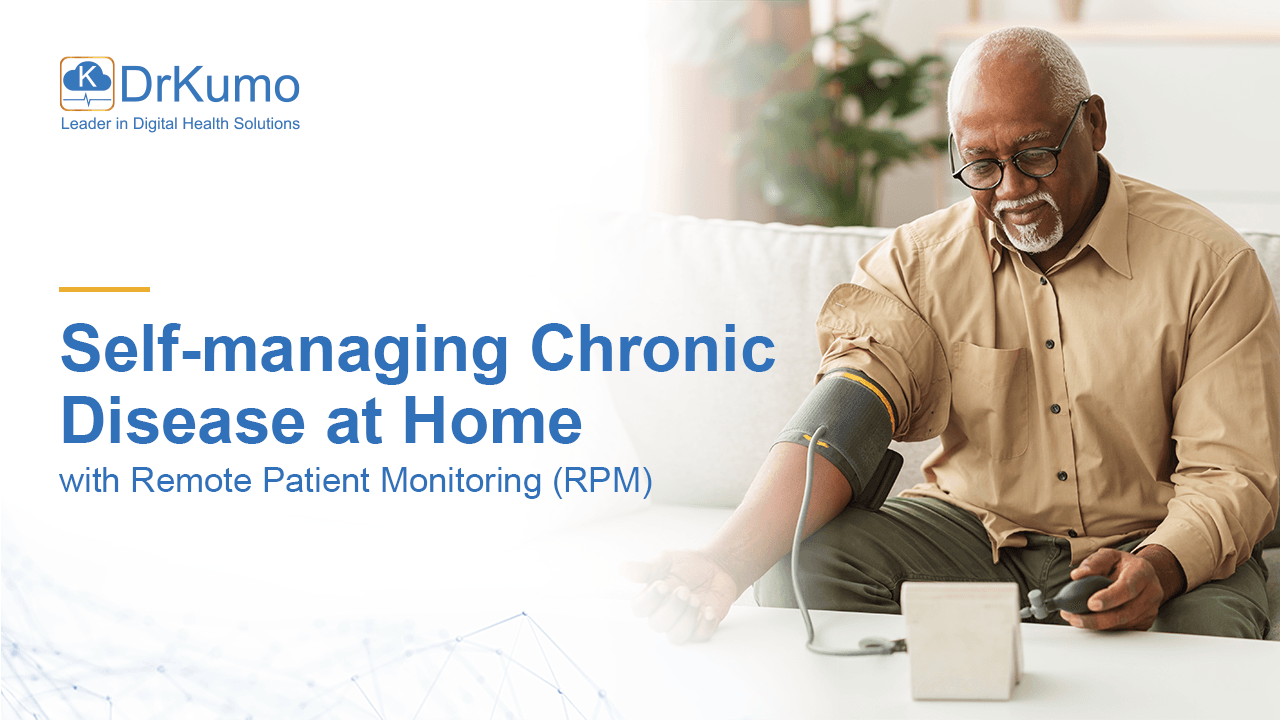
RPM involves the use of digital technologies such as mobile health apps, wearable sensors, and connected medical devices to monitor a patient’s health status, supporting the healthcare provider’s medical oversight from a distance.
RPM technology provides several key components essential for successful self-management:
- Real-Time Feedback: Patients receive immediate data on their vital signs (e.g., blood pressure, blood sugar levels), fostering a deeper understanding of how lifestyle choices affect their condition.
- Early Complication Identification: Continuous data streams enable healthcare providers to identify subtle patterns or anomalies early, allowing for timely, preemptive intervention before a symptom escalates into a costly acute event.
- Empowerment through Data: By regularly monitoring symptoms and vital signs, patients gain a greater understanding of disease triggers and trends. This consistent collection and analysis of data over time supports the clinician’s treatment decisions and enables proactive management of the chronic condition.
Improving Access to Care with Telehealth
One of the primary strategic benefits of RPM is its ability to increase healthcare access for patients, particularly those living in remote or medically underserved areas. RPM substantially reduces the necessity for routine, in-person clinical visits, which is especially beneficial for patients with mobility limitations or transportation issues. This increased convenience and flexibility in managing health directly translates into improved adherence to self-management practices and prescribed treatment plans.
2. Core Benefits of Chronic Disease Self-Management Programs (CDSMPs)
CDSMPs are evidence-based, structured programs that equip patients with the knowledge and skills necessary to navigate their health effectively. When integrated with RPM, these programs amplify their benefits:
- Improved Health Outcomes: CDSMPs help patients better manage their symptoms and reduce the frequency and severity of complications. Studies confirm that they lead to significant, measurable improvements in health and quality of life for adults with chronic diseases.
- Enhanced Self-Efficacy: These programs are fundamentally based on boosting a patient’s self-efficacy, and their confidence in their ability to manage their condition. By providing actionable devices and continuous monitoring data (via RPM), CDSMPs empower patients to take control and make positive, sustainable behavioral changes.
- Reduced Healthcare Costs: By improving patients’ health outcomes and reducing the need for acute, high-cost interventions, CDSMPs demonstrate strong economic value. Research has estimated annual net cost savings of approximately $364 per CDSMP participant after factoring in the cost of the program, primarily through averted emergency room visits and hospitalizations.
- Increased Social and Emotional Support: CDSMPs provide patients with opportunities to connect with peers living with similar chronic conditions. This peer interaction helps mitigate feelings of isolation and provides emotional encouragement, which is critical for long-term adherence.
- Improved Self-Management Skills: Patients develop essential behavioral skills, including practical goal setting, problem-solving, and informed decision-making, which are directly supported by the objective data collected through RPM devices.
3. Pillars of an Effective RPM-Integrated Self-Management Program
An effective self-management program requires a multi-faceted approach, with RPM technology strengthening each component:
- Education: Programs must provide clear, condition-specific information and strategies for symptom management. RPM data can be used during educational coaching sessions to highlight a patient’s personal health trends.
- Self-Monitoring (Strengthened by RPM): Patients benefit immensely from monitoring their own vital signs (e.g., blood pressure, blood glucose, weight). RPM technology automates data collection and transmission, providing objective data that helps patients identify changes and monitor progress toward health goals, supporting them in adjusting self-management strategies in real-time.
- Problem-Solving: Patients must learn to identify and address problems related to their chronic conditions, such as managing unexpected symptoms or coping with the emotional load of illness. RPM data serves as the objective starting point for problem-solving discussions with their care team.
Action Planning & Goal Setting
A successful self-management program must involve helping patients create specific, actionable plans to achieve their health goals. This includes setting realistic goals for lifestyle changes, medication adherence, and physical activity. Action plans are most effective when they are based on data and supported by follow-up, which RPM facilitates through automated reminders and recorded adherence metrics.
4. Evidence-Based Frameworks Driving Self-Management Success
CDSMPs are most effective when grounded in proven, evidence-based frameworks.
One such highly effective approach is the Chronic Care Model (CCM). This framework is centered on patient empowerment, emphasizing the importance of productive interactions between an informed, activated patient and a proactive, prepared practice team.
The CCM explicitly identifies Self-Management Support as one of its pillars of quality improvement. The use of RPM aligns perfectly with the CCM by:
- Providing the patient with the devices and data feedback to be informed and activated.
- Providing the practice team with the data systems (RPM platform) is necessary to be proactive, prepared, and ready for effective, targeted care.
RPM has been shown to improve clinical and psychological outcomes, with web- and mobile-based CDSM programs improving factors like self-efficacy and disease management activities among various adult populations.
5. Overcoming Challenges to Achieve Sustained Patient Engagement
Despite the clear benefits, effective self-management programs face common hurdles:
- Limited Patient Engagement: Many patients feel overwhelmed or struggle to adopt new behaviors.
- Solution: Programs must be designed for maximum accessibility and relevance, using motivational interviewing techniques and RPM platforms that require minimal patient effort (e.g., one-touch data transmission).
- Lack of Access to Resources: Patients may struggle to find community support or consistent professional guidance.
- Solution: Healthcare providers must actively leverage RPM to extend their reach and connect patients with identified community resources or peer support groups.
- Implementation and Sustainability: Healthcare providers face resource constraints when implementing new programs.
- Solution: Leveraging RPM technology improves program efficiency and cost-effectiveness by automating data collection and notification, ensuring that the self-management program can be sustained and scaled across a broader patient population.
6. Essential Resources from the U.S. Department of Health and Human Services (HHS)
The Department of Health and Human Services (HHS) and its agencies provide crucial, evidence-based resources to promote chronic disease self-management:
- CDSMPs: Offered through the Administration for Community Living (ACL), this widely disseminated program provides patients with devices for healthy eating, stress management, and communication. It is typically delivered in a group setting by trained lay leaders.
- Agency for Healthcare Research and Quality (AHRQ): AHRQ provides evidence-based technology and resources to help healthcare providers effectively design and implement self-management programs.
- Centers for Disease Control and Prevention (CDC): The CDC offers specialized resources like the National Diabetes Prevention Program, reinforcing the clinical knowledge and technology needed for chronic condition management.
DrKumo RPM for Self-Management: Continuous Support, Real-Time Intelligence
The self-management of chronic diseases is a critical aspect of managing long-term health conditions, and technology has been instrumental in making it easier and more efficient. DrKumo is a leader in RPM solutions, providing continuous, real-time health monitoring from the comfort of the patient’s home, supporting comprehensive chronic disease management.
DrKumo’s highly– secure, HIPAA-compliant, and mobile-enabled solution directly aids self-management by providing objective, continuous data. The RPM technology is powered by an AI/ML engine that delivers real-time intelligence to healthcare providers for timely intervention. By enabling patients to easily monitor their health, access records, and communicate with healthcare providers in real-time, DrKumo RPM technology supports patients and improves clinical outcomes.
Takeaways
RPM is the technology that fully unlocks the potential of CDSMPs. By providing patients with continuous support and objective data, RPM helps individuals effectively manage symptoms, improve health outcomes, and enhance their quality of life.
By incorporating a highly scalable, real-time RPM solution into your practice, you take the first, definitive step in advancing your patients’ ability to manage their chronic disease successfully. Contact DrKumo now to begin creating a healthier future for your patients.
Disclaimer: This article is designed for informational purposes for healthcare providers, administrators, and industry professionals. This is intended for US Healthcare Providers and discusses best practices and models for Remote Patient Monitoring (RPM) and Chronic Disease Self-Management Programs (CDSMPs). Clinical decisions regarding patient care, regulatory compliance, and reimbursement must align with current CMS and payer guidelines.