
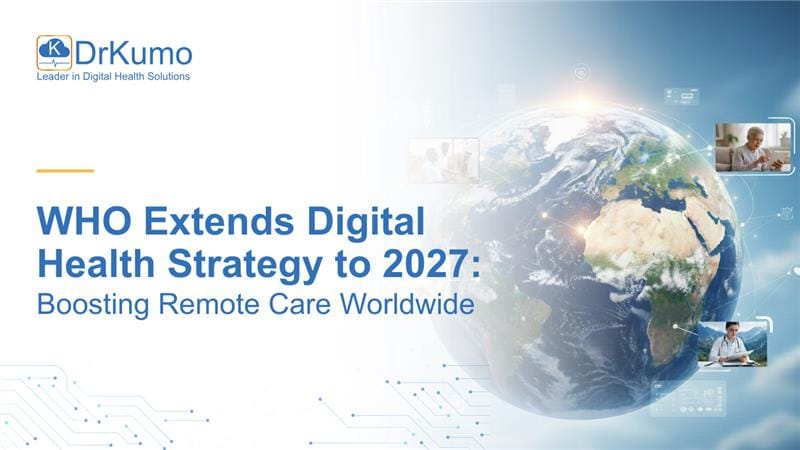
The World Health Organization (WHO) has extended its Global Strategy on Digital Health through 2027, reinforcing the role of technology in advancing universal health coverage.
The extension, announced in late 2025, builds upon the 2020–2025 framework and outlines a strategic path forward that supports the integration of digital technology, including remote monitoring, telemedicine, and artificial intelligence, into national healthcare systems. This development comes as health systems worldwide continue to face chronic disease burdens, workforce shortages, and rising care costs.
The 2027 Digital Health Roadmap
The updated WHO strategy emphasizes four core pillars: strengthening governance and policy, promoting infrastructure and interoperability, developing the digital health workforce, and ensuring equitable and secure access to digital services. As of 2025, over 129 countries have developed national digital health strategies aligned with WHO guidance.
Remote care plays a central role in this vision. Virtual consultations, wearable devices, mobile health applications, and AI-powered clinical support devices are identified as key technologies that can help close healthcare access gaps, particularly in underserved and rural populations. The WHO underscores the importance of using digital technology not just for innovation’s sake, but to improve continuity of care, reduce delays in diagnosis and treatment, and support data-driven clinical decisions.
Digital Health and Health Equity
The strategy also highlights the need to safeguard ethical standards, data privacy, and cybersecurity in the design and deployment of digital health interventions. Emphasis is placed on inclusion, ensuring that older adults, people with disabilities, and communities with limited digital access can benefit from remote care solutions. This aligns with WHO’s broader goal of building resilient, people-centered health systems.
The Global Strategy is supported by WHO’s Digital Health Technical Advisory Group and is reinforced by collaborative frameworks with other international bodies, including the International Telecommunication Union (ITU) and regional health alliances. These partnerships aim to share best practices, technical guidance, and capacity-building resources with countries at various stages of digital health maturity.
How DrKumo Aligns with WHO’s Global Vision
DrKumo’s mission to deliver real-time, remote patient monitoring solutions globally is closely aligned with the WHO’s expanded strategy. DrKumo’s platform supports the secure, continuous transmission of biometric data through wearable sensors, supporting clinicians to deliver timely interventions for chronic disease management and improved patient outcomes across diverse care settings.
In particular, DrKumo’s technology addresses two critical goals in the WHO strategy: expanding access to care in underserved communities and supporting healthcare providers to make data-informed decisions. Through multilingual support, scalable architecture, and AI-assisted data analytics for provider review, DrKumo helps supports health equity by providing technology that assists in expanding access for underserved populations.
Takeaways
Consistent with its mission to support digital health technology worldwide, the World Health Organization (WHO) has extended its Global Strategy on Digital Health through 2027. This extension offers continued strategic guidance for countries seeking to strengthen digital health systems in ways that promote equity, safety, and long-term sustainability. Through an emphasis on remote care technologies, including Remote RPM, telemedicine, mobile health, and Artificial Intelligence, the WHO encourages practical approaches to addressing ongoing healthcare challenges and improving access to care in underserved communities.
The updated strategy prioritizes technical reliability and data security to ensure that digital upgrades are broadly accessible and do not compromise patient privacy. Supporting these international goals, DrKumo’s RPM platform provides a secure, highly scalable solution designed to support digital health infrastructure. By integrating this advanced technology, the initiative fosters a more resilient and interconnected global health infrastructure that is consistent with the WHO long-term strategy.
To learn how DrKumo can support your organization in building digital health capacity and delivering real-time remote care, contact us today. Our team is ready to help you achieve scalable, data-driven patient care.
Disclaimer: This article is intended for informational purposes only and does not constitute medical advice. Always consult with a licensed healthcare provider for guidance on diagnosis, treatment, or medical decisions. References to the World Health Organization (WHO) do not constitute or imply an endorsement by WHO or the United Nations.