
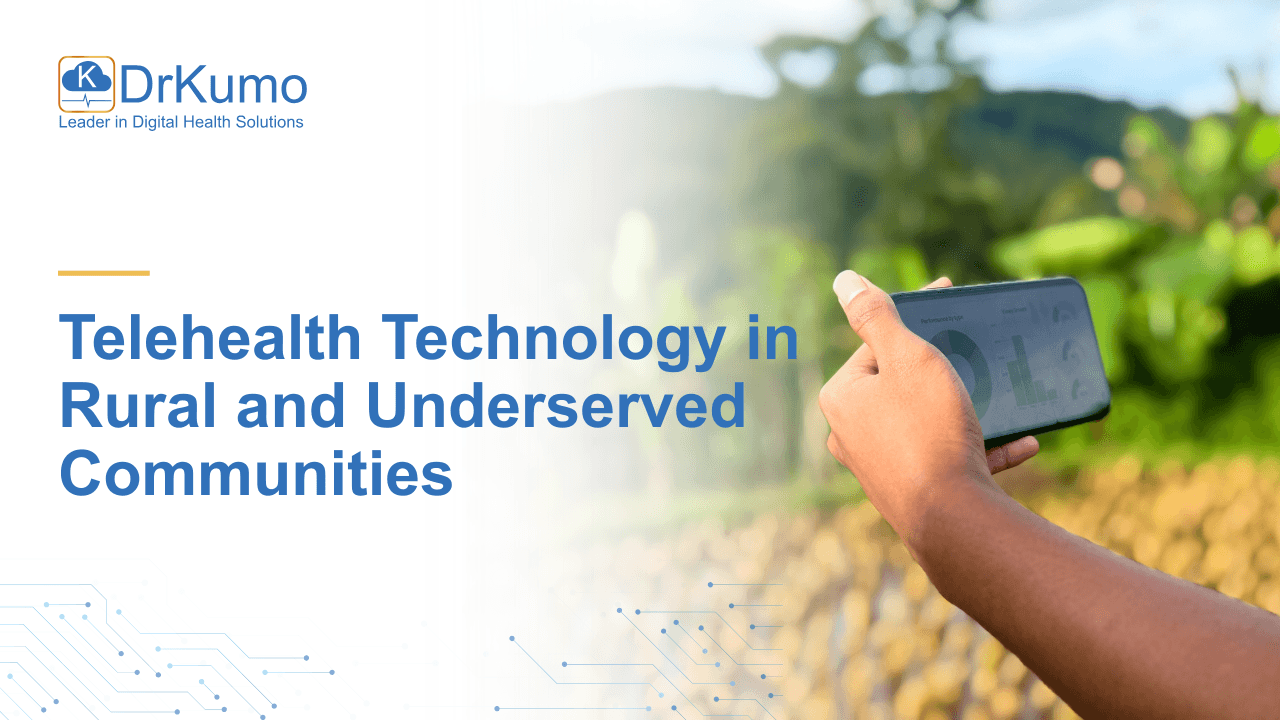
Telehealth technology supports increased healthcare access in rural health and underserved communities across the United States. For the more than 60 million Americans (about one in five) who live in rural areas, telehealth offers innovative ways to overcome distance, provider shortages, and resource constraints. By using digital communication and remote patient monitoring, healthcare providers can extend care beyond clinic walls.
Early evidence shows that telehealth not only improves access but also leads to better health outcomes, particularly for chronic disease management. This overview examines how telehealth addresses long-standing barriers, from workforce shortages to infrastructure limitations, and supports chronic care needs in rural and underserved populations.
What barriers do rural and underserved communities face in accessing healthcare
Rural and underserved areas across the U.S. face well-documented healthcare disparities. Millions of residents live far from hospitals and specialists, and many counties lack even a single primary care physician. More than 40 million rural Americans live in areas with too few primary care providers. In fact, 92% of rural counties were designated as primary care health professional shortage areas in 2023.
This workforce shortage means routine and preventive care is harder to obtain, contributing to worse health outcomes. Rural residents also tend to be older and have higher rates of chronic conditions (like heart disease and diabetes) than urban populations. By 2019, rural heart disease death rates were about 20% higher than urban rates, and other leading causes of death (cancer, chronic respiratory disease) showed similar rural disadvantages.
Geography and transportation pose additional barriers. Patients often must travel long distances for specialty care or even basic appointments, and public transportation is limited. These access challenges lead many rural patients to delay care or rely on emergency departments for non-urgent needs. Over one-third (38%) of rural adults report using an emergency room (ER) for conditions that could have been managed in primary care. Financial constraints also play a role: rural communities have higher uninsured rates and more residents on Medicare/Medicaid, straining local clinic resources. In summary, rural Americans face a perfect storm of far distances, provider shortages, and higher chronic disease burdens – underscoring the need for innovative solutions like telehealth to improve access to care.
How does telehealth increase access to care for rural patients
Telehealth has emerged as a framework for overcoming rural access barriers. By leveraging video conferencing, phone calls, and secure messaging, telehealth supports patients to connect with healthcare providers without the burden of travel. For someone living hours from a specialist or with limited mobility, a virtual visit can mean timely care that would otherwise be out of reach.
Telehealth effectively brings providers to the patient, closing the distance gap. For example, a rural patient can consult with an endocrinologist or cardiologist located in a city via a telehealth platform, rather than forgoing care or traveling hundreds of miles. This is especially valuable for underserved populations who may lack transportation or childcare to attend in-person visits.
Studies show that telehealth expansion correlates with improved healthcare utilization in rural areas. During the COVID-19 pandemic, when telehealth use was greatly expanded, 44% of rural Medicare beneficiaries accessed care via telemedicine (March 2020–Feb 2021), compared to 55% in urban areas. Although rural telehealth use still lagged slightly behind that of urban, the uptick was significant. In one survey after the pandemic, about 19% of rural adults had received primary care via telehealth, up from minimal usage pre-2020.
Patients report that virtual visits save travel time and expense, and they appreciate getting care sooner rather than waiting weeks for an in-person appointment. Telehealth also supports team-based care approaches in rural settings. For instance, a local nurse or community health worker can be with the patient while a remote physician conducts the consult. By reducing the need for long trips and bringing services directly into the home, telehealth is markedly improving access to primary care, mental health services, and specialty consults for rural patients.
Can telehealth help alleviate rural healthcare workforce shortages?
Though telehealth cannot instantly produce new doctors, it can extend the reach of the existing healthcare workforce and mitigate the impact of provider shortages. In rural communities with few specialists, telehealth networks support primary care clinics to consult with off-site specialists (cardiologists, endocrinologists, psychiatrists, etc.) when needed. This “virtual extension” means one specialist can serve multiple underserved areas remotely, helping more patients without physically being in each location.
Programs like Project ECHO connect rural primary care providers with academic medical center specialists via tele-mentoring, building local capacity to manage complex cases. Telehealth also supports provider-to-provider consultations. For example, a family physician in a remote town can electronically share patient records and get input from a neurologist in real time, improving patient care without a referral delay.
Importantly, telehealth can improve rural provider recruitment and retention by reducing professional isolation. Working in a small rural clinic often means limited peer support and continuing education opportunities. Telehealth creates virtual professional networks and mentoring relationships that make clinicians feel less isolated. As one rural doctor noted, telemedicine “fosters a collaboration that reduces the feelings of isolation… It’s like having one foot in the city but being able to live and practice in a rural area.”
By tapping into telehealth, rural providers can more easily obtain specialist guidance, share difficult cases, and stay current with best practices, factors that boost job satisfaction and reduce burnout. In fact, federal reports have recommended telehealth as a technology to support the rural health workforce, noting it can create virtual teams and continuing education pipelines. Overall, while telehealth is not a substitute for training more rural clinicians, it is helping maximize scarce human resources and making rural practice more attractive and sustainable.
What infrastructure challenges limit telehealth in rural communities
Implementing telehealth in rural and underserved areas comes with infrastructure hurdles, notably around broadband internet and technology access. High-quality telehealth (especially video visits) requires reliable broadband connectivity, yet broadband coverage is notoriously sparse in rural America.
According to the FCC, 22.3% of Americans in rural areas lack access to fixed broadband at even basic 25 Mbps download/3 Mbps upload speeds, compared to only 1.5% of urban Americans. In real numbers, roughly 14 to 19 million rural Americans do not have high-speed internet at home. This digital divide means many potential telehealth users are unable to participate in video consultations or transmit data reliably. Patients may have to rely on patchy cellular signals or travel to Wi-fi hotspots (e.g. libraries or parking lots) to connect with providers – an ironic barrier when telehealth is meant to save travel.
Other infrastructure limitations include a lack of technology equipment and digital literacy. Underserved patients might not own a computer or smartphone capable of telehealth video calls, or they may not know how to use healthcare apps and portals. Rural communities also have fewer IT support resources. A clinic may struggle with the costs of telehealth platforms, device procurement, and cybersecurity measures. These challenges can result in telehealth programs defaulting to simple telephone calls rather than full video visits or remote monitoring.
Broadband expansion is underway (through federal programs like USDA ReConnect and FCC rural broadband funds) to improve connectivity, but progress is uneven. In the interim, many providers adapt by using telehealth modalities that work over lower bandwidth, for example, offering phone-based consults or asynchronous messaging when live video is t feasible. Innovative approaches, such as lending patients cellular-enabled tablets or using remote monitoring devices that transmit via cell networks, can help bypass home internet gaps.
Ultimately, closing the rural broadband gap is essential to realizing telehealth’s full potential, since limited connectivity directly impacts the quality and consistency of telehealth delivery in these communities.
How does telehealth support chronic disease management and continuity of care?
Chronic diseases, like diabetes, hypertension, heart failure, and COPD, are prevalent in rural populations and often require ongoing management. Telehealth is proving invaluable in supporting these chronic care needs through remote monitoring and improved continuity of care. One major telehealth modality is Remote Patient Monitoring (RPM), which involves patients using connected devices at home (glucose meters, blood pressure cuffs, pulse oximeters, scales, etc.) to record daily health metrics. These data are securely transmitted to healthcare providers who can track the patient’s condition in between clinic visits. RPM allows earlier detection of issues (for instance, a weight gain in a heart failure patient or a blood sugar spike in a diabetic patient) and supports timely interventions, often preventing complications or hospitalizations.
Telehealth improves continuity of care by keeping patients connected to their care teams through more frequent virtual check-ins. This ongoing engagement supports medication adherence, symptom monitoring, and self-management. Medicare patients in systems with higher telehealth use have fewer emergency visits and better adherence to medications for chronic conditions such as diabetes and hyperlipidemia. By enabling early intervention and convenient follow-up, telehealth helps close chronic care gaps, particularly in rural areas, while improving outcomes and reducing avoidable emergency care.
How does DrKumo’s telehealth solutions support rural and underserved communities
DrKumo supports rural and underserved communities through telehealth solutions designed for low-resource environments. As one of only three awardees of the U.S. Department of Veterans Affairs RPM-Home Telehealth program, DrKumo has demonstrated the ability to deliver secure, scalable care at a national level. Its Remote Patient Monitoring platform uses easy-to-use wireless devices that transmit real-time vital signs via built-in cellular connectivity, eliminating the need for home Wi-Fi or smartphone apps. This approach is critical for rural areas with limited broadband access, enabling daily monitoring of blood pressure, glucose, oxygen saturation, and other indicators while allowing providers to intervene early through virtual consults or medication adjustments.
DrKumo’s solutions emphasize chronic care management, care coordination, and workforce support in rural settings. The platform integrates with electronic health records, enabling small clinics, FQHCs, and RHCs to collaborate with regional health systems and specialists, effectively expanding access to expertise. Deployments within the VA telehealth program have been associated with reduced hospital utilization and improved patient engagement among patients with chronic conditions. In addition, DrKumo Academy has trained more than 8,300 clinicians and care team members in digital health workflows, helping alleviate workforce strain. Built to meet HIPAA, FISMA, and NIST cybersecurity standards, DrKumo’s platform supports rural providers to adopt telehealth confidently while delivering continuous, high-quality care to underserved populations.
Takeaways
Telehealth has proven to be a transformative force for rural and underserved healthcare, addressing long-standing barriers of distance, provider scarcity, and chronic disease management. For healthcare providers serving these communities, now is the time to embrace telehealth innovations that can improve patient care and clinic efficiency.
Contact DrKumo today to schedule a demo or consultation and discover how these our digital health solutions can make a lasting impact on your patient population. Together, we can leverage telehealth technology to deliver equitable, high-quality care to every corner of America.
Disclaimer: This article is for informational purposes only and is not intended as medical or legal advice. Healthcare providers should ensure any telehealth program complies with HIPAA and other applicable regulations. Outcomes mentioned (such as reduced hospitalizations) may vary by setting. Always consult official guidelines and consider local patient needs when implementing telehealth solutions.