Healthcare Providers · Remote Physiologic Monitoring · CMS Reimbursement
7 min read
RPM
Chronic Care
CMS 2026
This guide outlines how Remote Physiologic Monitoring (RPM) supports the day-to-day management of patients with chronic conditions, the CMS reimbursement framework that supports it, and the practical considerations involved in establishing a program.
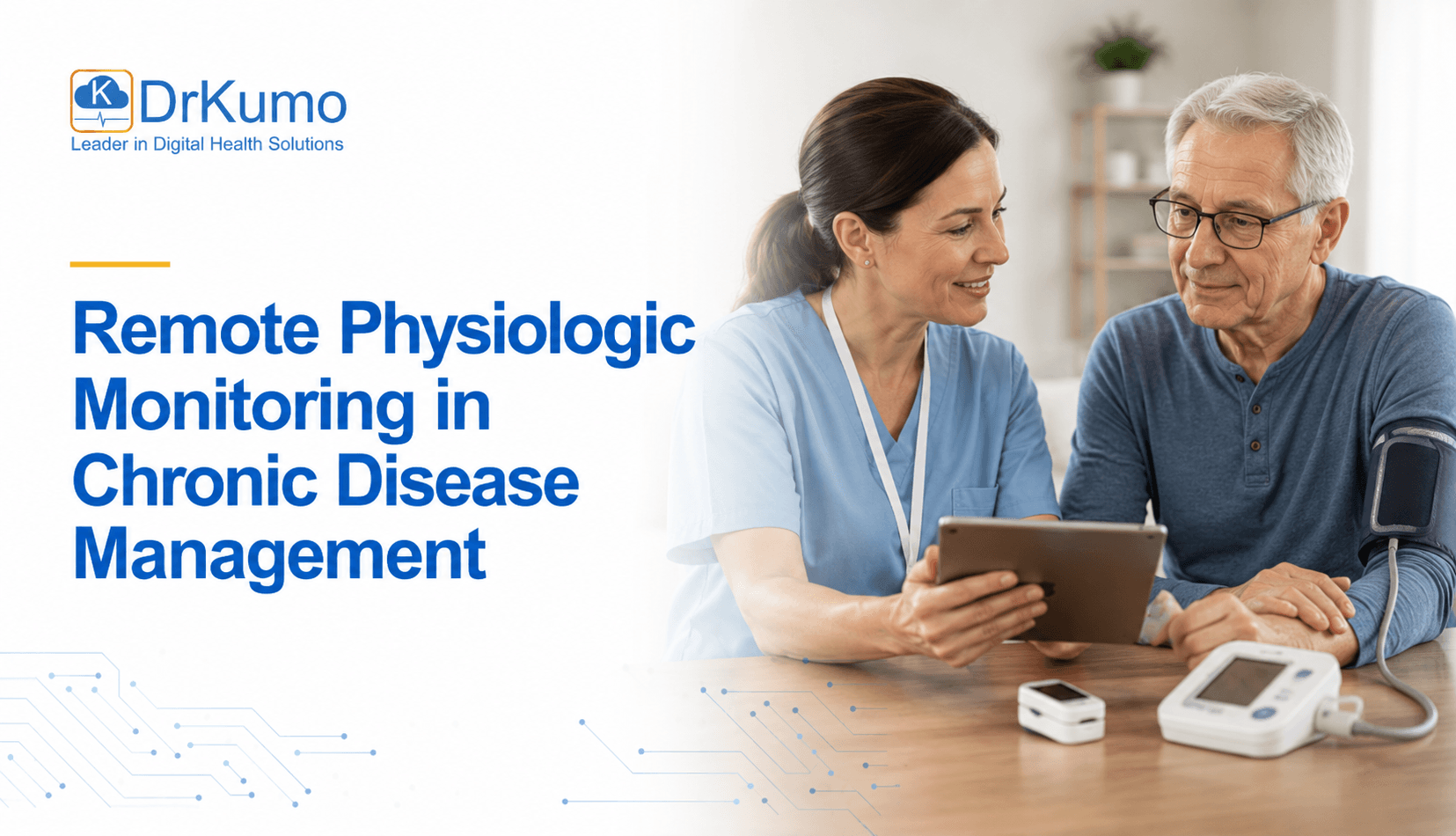
For healthcare providers, Remote Physiologic Monitoring (RPM) is a clinical integration that supports established practice workflows and the day-to-day management of patients with chronic conditions. RPM, also referred to as Remote Patient Monitoring, provides a structured framework for collecting patient health data outside of traditional office settings and routing it into provider review workflows.
While geographic, technological, and adherence factors remain real challenges, the systematic application of RPM can support care models that emphasize regular data review and earlier intervention. RPM is a supporting technology, not a universal solution; its value depends on patient selection, defined review workflows, and the discipline of consistent documentation.
Why Does Chronic Disease Management Matter for Healthcare Providers?
90%
$5.3T
3 in 4
According to the Centers for Disease Control and Prevention (CDC), chronic conditions drive a significant share of both clinical workload and healthcare spending in the United States. Between scheduled office visits, much of what happens with a patient’s condition is invisible to the clinical team. Small physiologic changes that could signal a need for an adjustment in care may not surface until the next appointment.
The clinical question is not whether to provide care between visits, but whether the data needed to inform that care is reliably available. RPM addresses that gap by giving clinicians access to physiologic data on a regular basis, supporting earlier identification of trends in conditions such as hypertension, heart failure, chronic obstructive pulmonary disease (COPD), and diabetes.
What Is Remote Physiologic Monitoring and How Does It Work?
Remote Physiologic Monitoring is a healthcare delivery method that uses digital technologies to collect physiologic data from a patient in one location and electronically transmit it to a healthcare provider in another for clinical review. For a broader understanding of how these systems function within a clinical framework, providers can refer to our comprehensive guide to Remote Patient Monitoring.
In a typical RPM workflow:
- Data Collection. Physiologic data such as blood pressure, blood glucose, weight, oxygen saturation, and heart rate is collected through medical devices as defined by the FDA, used by the patient at home.
- Data Transmission. Readings are transmitted through encrypted channels to the provider’s data repository, not over public networks.
- Clinical Review. Providers assess data through dashboards during established workflow times, with provider-defined thresholds determining which readings warrant clinical attention.
- Documentation. Reviewed data and any clinical responses are documented in the patient’s record, supporting both ongoing care and reimbursement requirements.
How Does RPM Support Chronic Disease Management?
The integration of RPM into chronic disease management gives clinical teams a more consistent view of how patients are doing between visits. Rather than relying solely on patient self-reports during office appointments, providers can document trends drawn from regular device transmissions.
Standardized clinical protocols often anchor this oversight. Provider-led disease management protocols define how data is reviewed for specific conditions, which thresholds apply, and what documentation is required at each review interval. Hypertension oversight may be built around systolic and diastolic ranges adjusted per patient. Heart failure monitoring is commonly anchored to daily weight changes. COPD oversight typically tracks oxygen saturation patterns. Diabetes management often centers on blood glucose trends.
RPM and CMS’s Chronic Care Management (CCM) program are distinct services. CCM focuses on care coordination time for patients with multiple chronic conditions and is billed under its own CPT codes. RPM focuses on the collection and review of physiologic device data and is billed under its own codes. CMS allows both services to be billed for the same patient when the documentation and time-tracking requirements for each are independently met.
The 2026 CMS update is the biggest expansion of RPM reimbursement in years. Practices that adjust their billing workflows to capture 99445 and 99470 will reach patient populations that did not previously qualify under the existing thresholds.
DrKumo Editorial Team
How Do Providers Establish a Remote Physiologic Monitoring Program?
A practical Remote Patient Monitoring program brings together hardware, software, and clinical workflow. Four elements support the foundation:
- Patient Selection and Enrollment. Identify patients whose conditions and circumstances align with the data the technology can capture, and confirm consent before initiating service.
- Device Distribution and Education. Distribute cellular or Bluetooth-enabled medical devices and provide instruction on use before the patient leaves the clinical setting.
- Clinical Review Workflow. Define thresholds, escalation pathways, and the cadence of review so incoming data is triaged according to clinical priority.
- Technical Foundation. Maintain cybersecurity, connectivity, and data integrity standards through transmission, storage, and review.
Cybersecurity is foundational throughout. Aligning RPM workflows with established frameworks, such as the NIST and NCCoE cybersecurity guidance for RPM practices, supports the protection of patient-generated health data and helps support HIPAA-aligned workflows for covered entities.
What Are the CMS Reimbursement Codes for Remote Physiologic Monitoring?
The Centers for Medicare and Medicaid Services (CMS) reimburses RPM through a set of Current Procedural Terminology (CPT) codes that cover device setup, ongoing data supply, and clinical management time. The codes below reflect the framework in effect for 2026, including two codes new this year.
99453
Initial Setup and Education
Threshold: once per device per patient
Covers the one-time setup and patient education on the use of the equipment.
99454
Device Supply (Standard)
Threshold: 16 to 30 days of data per 30
Covers device supply with daily recording or programmed alerts when 16+ days of data are captured.
99457
Treatment Management (Standard)
Threshold: 20+ minutes per calendar month
Covers the first 20 minutes of management; requires live, interactive communication with the patient.
99458
Additional Management Time
Threshold: each additional 20-minute increment
Add-on code billed for each additional 20-minute block beyond the initial 99457 threshold.
99445
Device Supply (Short-Duration)
Threshold: 2 to 15 days of data per 30
Mutually exclusive with 99454. Opens reimbursement to patients with fewer than 16 days of data.
99470
Treatment Management (Short)
Threshold: 10 to 19 minutes per calendar month
Mutually exclusive with 99457. Captures shorter-duration management time previously unbillable.
CMS requires at least one live, interactive communication with the patient or caregiver each calendar month for the treatment management codes (99457, 99458, and the new 99470). Asynchronous review alone does not meet the requirement. The interaction must be documented in the patient’s record alongside the time spent and the clinical findings reviewed.
What Changed in the 2026 RPM Code Updates?
On November 5, 2025, CMS released the Calendar Year 2026 Physician Fee Schedule Final Rule. The most significant change for RPM was the addition of two new codes that broaden reimbursement options for patient populations that did not previously meet billing thresholds under the existing framework.
In practice, the decision logic for billing each month now looks like this:
If 16 to 30 days of data…
If 2 to 15 days of data…
If 20+ minutes of management…
If 10 to 19 minutes of management…
The new codes do not replace the existing ones; they fill a gap. Patients with shorter monitoring periods or briefer management time, who previously generated no billable RPM service, can now be reimbursed under the new codes when they meet the relevant thresholds. The codes are mutually exclusive with their established counterparts: a provider bills either 99445 or 99454 for device supply in a given 30-day period, not both.
How Does DrKumo Support Remote Physiologic Monitoring Programs?
DrKumo provides RPM technical infrastructure that supports healthcare providers in deploying programs for the regular collection and organization of physiologic data. The platform supports the secure transmission of data from medical devices as defined by the FDA into a centralized dashboard for clinician review.
- Technical Infrastructure. Supports the secure flow of physiologic data from devices in the patient’s home to the provider’s centralized repository.
- Cybersecurity Alignment. Designed to support HIPAA-aligned workflows for covered entities, in line with established cybersecurity guidance, including NIST and NCCoE recommendations for RPM.
- Clinician-Centered Design. Organizes data into dashboards intended to fit within established clinical review workflows during scheduled professional hours.
- Technology, Not Clinical Services. DrKumo is a technology provider. The platform supports clinicians; it does not provide medical judgment, emergency response, or clinical services.
Patient selection, threshold definitions, clinical review protocols, and billing decisions are determined by the healthcare provider, not by the technology.
Frequently Asked Questions About Remote Physiologic Monitoring
Executive Brief
RPM supports chronic disease management by giving clinical teams a regular, structured view of physiologic data between visits.
With careful patient selection, defined review workflows, and cybersecurity-aligned infrastructure, providers can build programs that support both clinical decisions and CMS reimbursement requirements.
The 2026 Physician Fee Schedule Final Rule expanded the code set to include shorter-duration monitoring, opening reimbursement to patient populations that previously did not meet billing thresholds.
DrKumo is not a clinical entity and does not provide clinical services. DrKumo provides the technical infrastructure that supports clinicians in collecting, transmitting, and organizing RPM data within their established workflows.
The clinician remains the responsible decision-maker, and RPM is intended for monitoring purposes only. It does not replace emergency care.
Structured RPM, supported infrastructure
Support your chronic care workflows with secure RPM technology.
Contact DrKumo to learn how our infrastructure can support your team’s RPM program for patients with chronic conditions.
Disclaimer: This article is designed for informational purposes for U.S. healthcare providers, administrators, and IT leaders. The content discusses general technology applications, clinical workflow considerations, and CMS reimbursement frameworks. It is not intended to serve as professional medical guidance, legal advice regarding compliance, or specific financial counsel. Healthcare providers should consult applicable federal and state regulations, payer policies, and compliance guidelines, and should exercise independent professional judgment before implementing or billing for Remote Physiologic Monitoring services. DrKumo is a technology provider and is not a clinical entity, nor does it provide clinical services, emergency medical response, or medical decision-making. The technology is a repository for data to be reviewed by qualified clinicians according to their own professional discretion and schedule.