Healthcare Providers · Remote Patient Monitoring · Best Practices
7 min read
RPM
HIPAA
Patient Safety
Remote Patient Monitoring (RPM) supports clinicians in collecting and reviewing patient physiologic data outside of traditional office settings. The five practices below outline what a clinically grounded, secure, and sustainable RPM service looks like in actual U.S. healthcare practice.
The Case for Structured RPM Practices
Remote Patient Monitoring (RPM) services allow healthcare teams to capture and review patient physiologic data outside of in-person office visits. When implemented well, RPM supports earlier identification of clinical trends, structured documentation, and reimbursable care delivery. When implemented without discipline, it produces high-volume, low-value data streams that contribute to clinical workload without informing decisions.
The difference is rarely technology. It is service design. Effective RPM is built around clinically relevant thresholds and scheduled clinical review, not raw data frequency. The five practices below outline a framework for designing RPM services that support patient safety, operational efficiency, and HIPAA-aligned data handling.
RPM is a scheduled-transmission monitoring service, not continuous surveillance. Devices transmit physiologic data at defined intervals for clinician review, rather than streaming data around the clock. This distinction shapes how each practice below should be implemented.
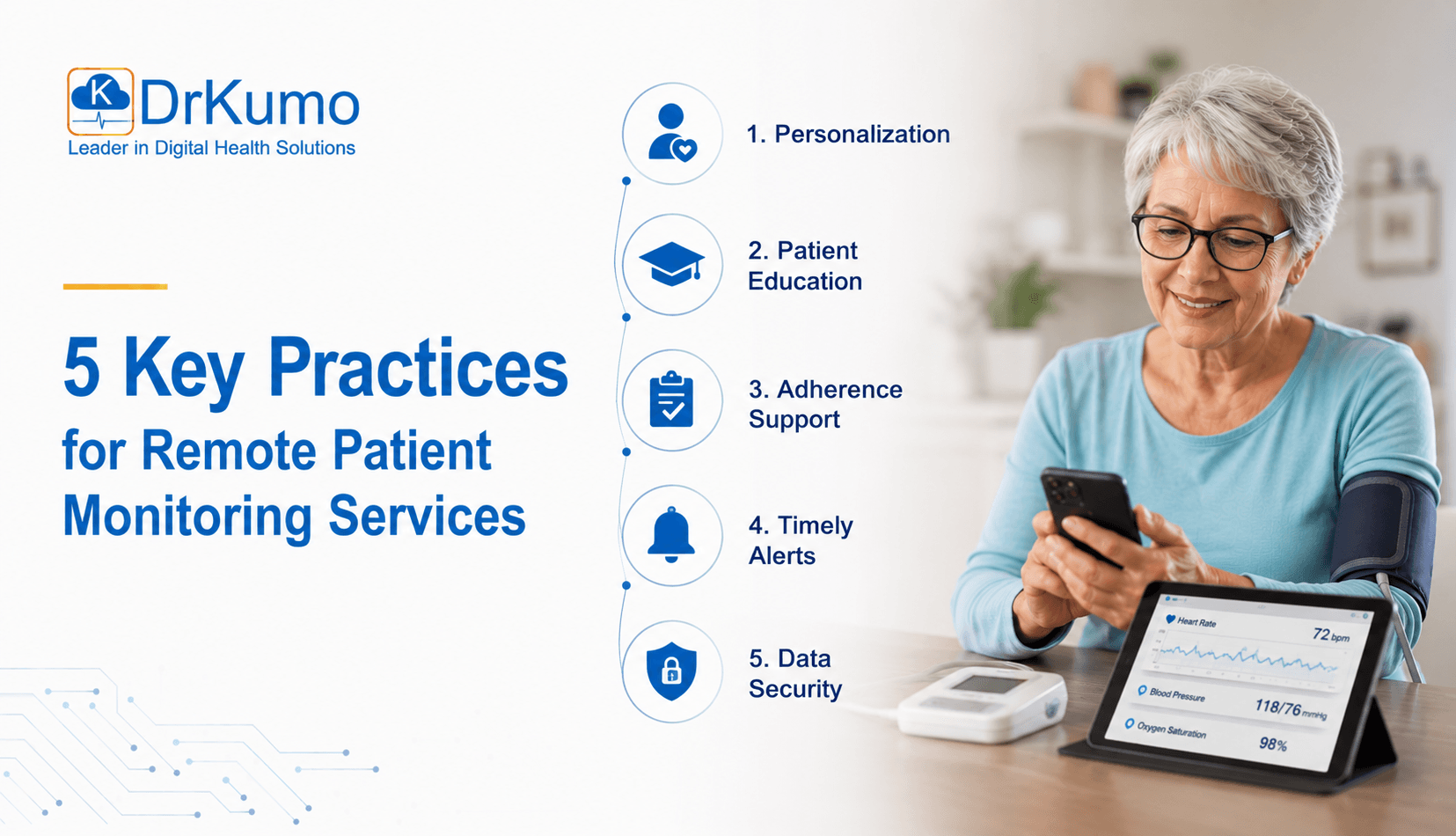
What Are the 5 Best Practices for Remote Patient Monitoring Services?
These five practices apply across most chronic condition use cases, from hypertension and heart failure to chronic obstructive pulmonary disease (COPD) and diabetes. Each practice addresses a specific operational risk that has been observed across RPM programs in U.S. healthcare.
Personalized Care Plans
Risk-stratified protocols built around individual patient context.
Patient Education and Onboarding
Hands-on training that drives accurate, sustained device use.
Medication Adherence Support
Evidence-based tactics to support long-term care plan adherence.
Threshold-Based Notifications
Clinically relevant alerts that cut through data noise.
HIPAA-Aligned Security
Cybersecurity foundations for patient-generated health data.
How Should Healthcare Teams Personalize RPM Care Plans?
Generic, one-size-fits-all RPM protocols rarely match the realities of individual patient circumstances. Effective programs build care plans around the patient’s clinical profile and environment, supporting both accurate data collection and sustainable engagement.
A standard onboarding framework typically captures two layers of context:
- Comprehensive Patient Profile. Medical history, chronic conditions, current medication regimen, known allergies, and dietary considerations that may influence interpretation of physiologic data.
- Lifestyle and Environment. The patient’s daily routine, physical activity level, living environment, and connectivity access, supporting an RPM plan that is realistic in the patient’s actual setting.
Provider-led disease management protocols define the clinical pathways, thresholds, and review cadence for specific conditions. RPM services support these protocols by feeding patient-specific data into clinical review workflows.
What Does Effective Patient Onboarding Look Like for RPM?
Even well-designed RPM technology produces unreliable data if patients cannot use it consistently. Patient education and device usability are foundational to accurate physiologic data and sustained engagement. Three onboarding elements drive most outcomes:
- Hands-On Training. The clinical team should dedicate time to demonstrate the proper use of each device, such as the blood pressure cuff, weight scale, or pulse oximeter, before the patient leaves the clinical setting.
- Connection and Transmission Clarity. Patients should leave onboarding having successfully connected the device to its companion application and confirmed a test transmission to the provider’s system.
- Reading Interpretation. Patients should understand which readings warrant clinical contact, which are routine, and how to escalate concerning symptoms outside of the RPM channel.
Selecting devices with intuitive user interfaces minimizes measurement errors and supports the accuracy of the data on which clinical decisions depend.
How Can RPM Programs Support Medication Adherence?
Medication non-adherence is a documented driver of worsening chronic conditions and avoidable hospitalizations. According to the World Health Organization’s Adherence to Long-Term Therapies report, adherence to long-term therapies for chronic conditions averages approximately 50 percent in developed countries, with adherence to antihypertensive therapy often lower in real-world practice. Patients with asymptomatic conditions are at particular risk of adherence decline over time.
RPM services support adherence through three evidence-based tactics:
- Scheduled Reminders. Customizable medication reminders delivered through the RPM application or platform, configured by the clinical team to match the patient’s regimen.
- Structured Clinical Communication. Consistent, documented communication between the care team and patient, supporting self-management without creating unnecessary clinical workload.
- Threshold-Based Triage. Scheduled review of incoming physiologic data using provider-defined thresholds, supporting clinically informed adjustments when readings indicate adherence-related changes.
How Should RPM Programs Handle Notifications and Escalations?
Notifications are how RPM data translates into clinical action. The challenge is signal versus noise. A notification system that fires on every reading produces alert fatigue and clinical burnout. A system that fires only when readings cross defined thresholds supports timely intervention without overwhelming the care team.
According to research published by the Agency for Healthcare Research and Quality (AHRQ), a review of Joint Commission sentinel event reports has implicated communication failures as a root cause in over 70 percent of sentinel events, anchoring the case for clearly designed clinical notifications.
AHRQ, citing Joint Commission sentinel event data
Well-structured RPM notifications are:
- Threshold-Driven. Triggered when physiologic readings cross provider-defined ranges, not on every transmission.
- Documented. Each notification, its review, and the resulting clinical action is captured in the patient record, supporting both ongoing care and audit defense.
- Patient-Facing Where Appropriate. Reminders for measurements, medication, or follow-up visits delivered to the patient through the RPM platform to support engagement and care plan adherence.
How Do You Maintain a HIPAA-Compliant and Secure RPM System?
Patient data security and patient safety are inseparable in RPM. A breach compromises patient privacy, exposes sensitive medical records, and creates legal and reputational risk for the provider organization. When selecting an RPM technology partner, three cybersecurity foundations should be confirmed:
- End-to-End Encryption. Patient data should be encrypted in transit between the device, the cloud, and the provider interface, and at rest in storage.
- Multi-Factor Authentication (MFA). MFA should be required for all clinical access points to reduce the risk of unauthorized entry to electronic protected health information (ePHI).
- Regular Security Audits and Updates. The platform should maintain current cybersecurity controls, with documented audit trails and timely patching to address evolving threats.
Aligning RPM workflows with established frameworks such as the NIST and NCCoE cybersecurity guidance for RPM practices supports the protection of patient-generated health data and helps support HIPAA-aligned workflows for covered entities.
The HIPAA Security Rule defines four technical safeguard categories that apply to electronic protected health information: access control, audit controls, integrity, and transmission security. Each applies to the RPM data lifecycle, from device-level encryption through clinical dashboard access. RPM service design should document how each safeguard is satisfied.
Frequently Asked Questions About RPM Services
How Does DrKumo Support These Five Practices?
DrKumo provides Remote Patient Monitoring technical infrastructure that supports each of the five practices above. The platform captures physiologic data from medical devices, as defined by the U.S. Food and Drug Administration (FDA), through encrypted channels, and organizes that data into structured dashboards for clinician review. Threshold definitions, review cadences, and escalation pathways are configured by the healthcare provider; DrKumo’s role is providing the secure, HIPAA-aligned data infrastructure that supports adherence to provider-led clinical protocols.
DrKumo is a technology provider and is not a clinical entity. The platform does not provide medical advice, diagnostic interpretation, treatment recommendations, or emergency response. Clinical decisions remain the sole responsibility of the attending healthcare provider. DrKumo’s technology aligns with NIST and NCCoE cybersecurity guidance for RPM practices, supporting the data integrity and access control requirements that HIPAA-compliant programs depend on. For a closer look at the technology, see our comprehensive guide to Remote Patient Monitoring.
Takeaways
A high-functioning RPM service is the product of design choices, not technology features. Personalized care plans, structured patient onboarding, medication adherence support, threshold-based clinical notifications, and HIPAA-aligned cybersecurity together define what a clinically grounded RPM service looks like. The framework matters because RPM is most valuable when it delivers the right data at the right time, supports timely clinical intervention, and respects the boundaries of scheduled-transmission monitoring.
DrKumo is not a clinical entity and does not provide clinical services. DrKumo provides the technical infrastructure that supports clinicians in operationalizing their RPM services within their established workflows. The clinical decisions, diagnostic interpretations, and treatment changes remain the responsibility of the attending healthcare provider.
From practice to program
Operationalize the five RPM practices with structured, secure infrastructure.
Disclaimer: This article is intended for informational purposes only and does not constitute medical, legal, or financial advice. Always consult with a licensed healthcare provider for guidance on diagnosis, treatment, or medical decisions. DrKumo is a technology provider and is not a clinical entity, nor does it provide clinical services, medical advice, diagnostic interpretation, treatment changes, or emergency response. DrKumo medical devices are technologies for data collection and transmission intended for periodic review by a qualified healthcare professional; they do not provide continuous surveillance or emergency response. Patients should not interpret data independently and must follow all provider-led protocols. Providers must exercise independent professional judgment before implementing any technology or protocol changes.
Government Reference Disclaimer: References to the U.S. Food and Drug Administration (FDA), the Centers for Medicare and Medicaid Services (CMS), and the National Institute of Standards and Technology (NIST) do not constitute or imply an endorsement by these agencies or the U.S. Government.